
Furnace repair for Northwest Indiana, done in the right order
Most furnace calls we take between October and March start the same way. Somebody wakes up at 5 a.m., the house is 58 degrees, and the furnace is either silent or blowing air that feels like the inside of a refrigerator. The first question on their mind is usually the wrong one: “Is this going to be a new furnace?”
Almost always, no. A furnace is a handful of parts that each do one job. The igniter lights the gas. The flame sensor proves the flame is there. The inducer motor clears the flue. The blower moves the warm air. The control board runs the sequence. When one of those parts fails, the furnace stops, and you replace that part. That’s furnace repair. It is not a sales appointment, and we don’t run it like one.
We’re based in Munster and we cover about 20 miles around it, from Whiting on the lake down to Cedar Lake, and across the state line into Lansing and Calumet City. This page explains how we handle a furnace repair anywhere in that area. If you want the local version, pick your town from the list further down.
The order we work in
Order matters. A lot of bad repair bills come from a tech who guessed first and tested second. Here is how a visit goes with us.
- A person answers. Day or night, a real person picks up, asks what the furnace is doing, and tells you the diagnostic fee before anyone drives over.
- Safety first. If you smell gas, we’ll tell you to leave the house and call NIPSCO or 911 from outside. If a carbon monoxide alarm is going off, get everyone out and call 911. We come after that’s handled.
- We watch it run. The tech calls for heat and watches the full startup sequence. Most failures show themselves at a specific step, and that step points to the part.
- We test the suspect part. Meter readings, not hunches. You can look over the tech’s shoulder if you want.
- Repair price on paper. You get a written, flat price for the repair before any work starts. You say yes or no.
- Fix, then prove it. After the repair we run the furnace through several full cycles and check temperatures at the supply vents.
What usually breaks
Around here, the same half-dozen failures cover most no-heat calls. None of them, by themselves, mean the furnace is finished.
Igniters and flame sensors
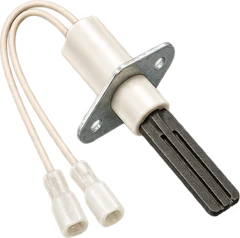
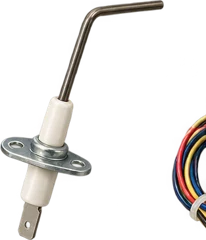
Hot surface igniters are brittle and wear out. A cracked one glows weakly or not at all, and the furnace tries a few times and locks out. Flame sensors don’t usually break; they get coated and stop reading the flame, so the furnace lights, runs for a few seconds, and shuts the gas off. A dirty sensor is one of the cheapest fixes there is. If yours is clicking and never lighting, our article on why a furnace won’t light walks through what you can safely check first.
Inducer and blower motors
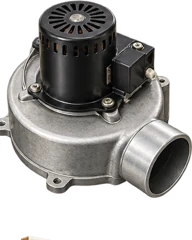
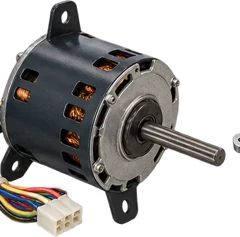
The inducer is the small motor that pulls combustion gases out through the flue before the burners light. When its bearings go, you’ll hear a whine or a grind, then nothing. The blower is the big fan that pushes heat through your ducts. Blower motors and their capacitors fail more in homes where the filter doesn’t get changed, because the motor works harder every day it runs against a clogged filter.
Limit switches, pressure switches and boards
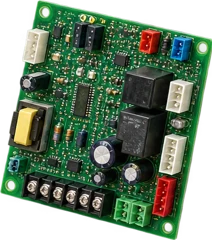
Safety switches do exactly what they’re built to do: shut the furnace off when something is wrong. A tripped high limit often means airflow trouble, like a dirty filter or closed vents. A pressure switch fault can point to a blocked flue, a cracked hose, or a failing inducer. Control boards do fail, but less often than people are told, so we test the inputs before we condemn the board.
Thermostats and simple stuff
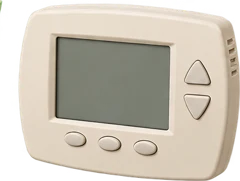
Some calls end in five minutes. Dead thermostat batteries. A switch on the side of the furnace that someone flipped off thinking it was a light. A furnace door not seated, which keeps the safety switch open. We’ll tell you when it’s one of those, and we’ll tell you how to check it yourself next time.
Cold air from the vents is its own problem
“It’s running, but the air is cold” is the most common thing we hear, and it has a different list of causes than a dead furnace. The fan may be set to ON instead of AUTO. The burners may be lighting and dropping out. The limit switch may be cutting the flame because the filter is packed. Our guide to why a furnace blows cold air covers the homeowner checks in order. If none of them fix it, call us and tell us what you tried. That saves time on the visit.
About the “it’s 15 years old” line
You’ve probably heard it, or heard about somebody who did. A tech opens the panel, looks at the date on the data plate, and says the furnace is too old to be worth fixing. That isn’t a diagnosis. It’s a sales opener.
A furnace’s age tells you roughly how many winters it has left, not what’s wrong with it today. A 16-year-old furnace with a bad igniter needs an igniter. What actually ends a furnace’s life is a cracked heat exchanger, a repair that costs more than the unit has left in it, or a pattern of failures piling up in a short time. When we see one of those, we’ll say so and show you. Our techs aren’t paid on commission, so nobody makes more money by talking you into a new system. If you’re weighing it yourself, read whether it’s worth fixing a 15-year-old furnace, and if the numbers do point the other way, our furnace replacement page explains how we quote that.
The houses we work in
Lake County housing is mixed, and the furnace setup changes with it. Older brick bungalows in Hammond, East Chicago and Whiting often have a basement furnace on original ductwork that has been added onto over the decades. Post-war ranches in Highland and Griffith sometimes put the furnace in a crawlspace or a tight hall closet, which makes access half the job. Newer subdivisions in Dyer, St. John, Schererville and Crown Point tend to have high-efficiency furnaces venting through the side wall with PVC pipe, and those vents can ice over or drift shut in a hard lake-effect snow.
Knowing the house before we walk in means fewer surprises. It also means the tech usually has the common parts for that kind of furnace on the truck.
Pick your town
We have a furnace repair page for each town we serve, with local notes and nearby towns. Munster is home base, so start with furnace repair in Munster, or find yours: Highland, Hammond, Dyer, Schererville, St. John, Griffith, Crown Point, Merrillville, Hobart, East Chicago, Whiting, Cedar Lake, Lansing, IL and Calumet City, IL. The full map is on our service area page.
A few things you can do before we get there
- Check the thermostat: set to HEAT, set a few degrees above room temperature, fresh batteries if it has them.
- Pull the filter and look at it. If you can’t see light through it, swap it.
- Make sure the furnace power switch is on and the breaker hasn’t tripped.
- Check that the furnace door panel is fully seated.
- For high-efficiency furnaces, look outside for snow or ice blocking the white PVC vent pipes.
- Close curtains and shut doors to rooms you aren’t using to hold heat in.
Don’t open the gas valve housing, bypass a safety switch, or relight anything you aren’t sure about. If something smells like gas, get out first.
Keeping the next repair small
Most of the expensive furnace calls we see started as cheap ones that got ignored. A furnace that short cycles for a month wears out its igniter and stresses its heat exchanger. A filter left in all winter cooks the blower motor. A yearly fall check catches the small stuff while it’s still small, and our seasonal tune-ups page lays out what that visit covers. For general efficiency and upkeep guidance that isn’t trying to sell you anything, the U.S. Department of Energy’s Energy Saver site is a good, plain reference.
Call us
No heat right now? Call (219) 555-0142. A person answers, even at 3 a.m. on a Sunday. We’ll ask what the furnace is doing, tell you what the visit costs, and get a tech moving. If it isn’t urgent, send the form below and we’ll call you back. Either way, you’ll see the repair price on paper before anybody picks up a wrench.