



A new air conditioner should fit the house, not the sales target
Most people buy a central air system two or three times in their life. The folks selling them do it every day. That gap is where a lot of bad installs come from: a unit bigger than the house needs, ductwork nobody looked at, an efficiency tier picked because it had the best margin. Then the homeowner lives with it for 15 summers.
We install air conditioners across the Munster area, and we do it a little differently. The quote starts with the system you have now, because if it can be repaired for a fair price, that’s what we’ll tell you. When a new AC is the right call, we size it to your house, explain the choices in plain words, and put the full price on paper before we set a single pad.
Three reasons people call us about a new AC
The old one failed
If your air conditioner just quit, start with AC repair. Most failures are a capacitor, a contactor or a fan motor, and those are small fixes. We only talk replacement when something big has gone, like a compressor on an older system, or a coil leak that would cost more to fix than the unit has left. When that happens you get both prices on the same sheet: repair as Option A, replacement as Option B.
The house never had central air
Plenty of older homes around here were built without it. Some 1920s and ’30s houses in Hammond, Whiting and East Chicago were heated by boilers and radiators, so there are no ducts at all. Others have a forced-air furnace but never got a coil and condenser added. Adding a coil to an existing furnace is often simple. A house with no ducts is a different conversation, and a ductless mini-split can be the cleaner answer there. We’ll show you both approaches when both fit.
The system never worked right
Upstairs is 82 while the basement is 68. The house feels damp even when it’s cool. The unit runs in short bursts all afternoon. Those are often signs the system was sized wrong or the ductwork can’t carry the air it needs. Replacing the condenser alone won’t fix that, so we look at the whole path the air takes before we quote anything. If clamminess is your main complaint, why your house is humid with the AC on explains how an oversized unit causes it.
Sizing is the whole job
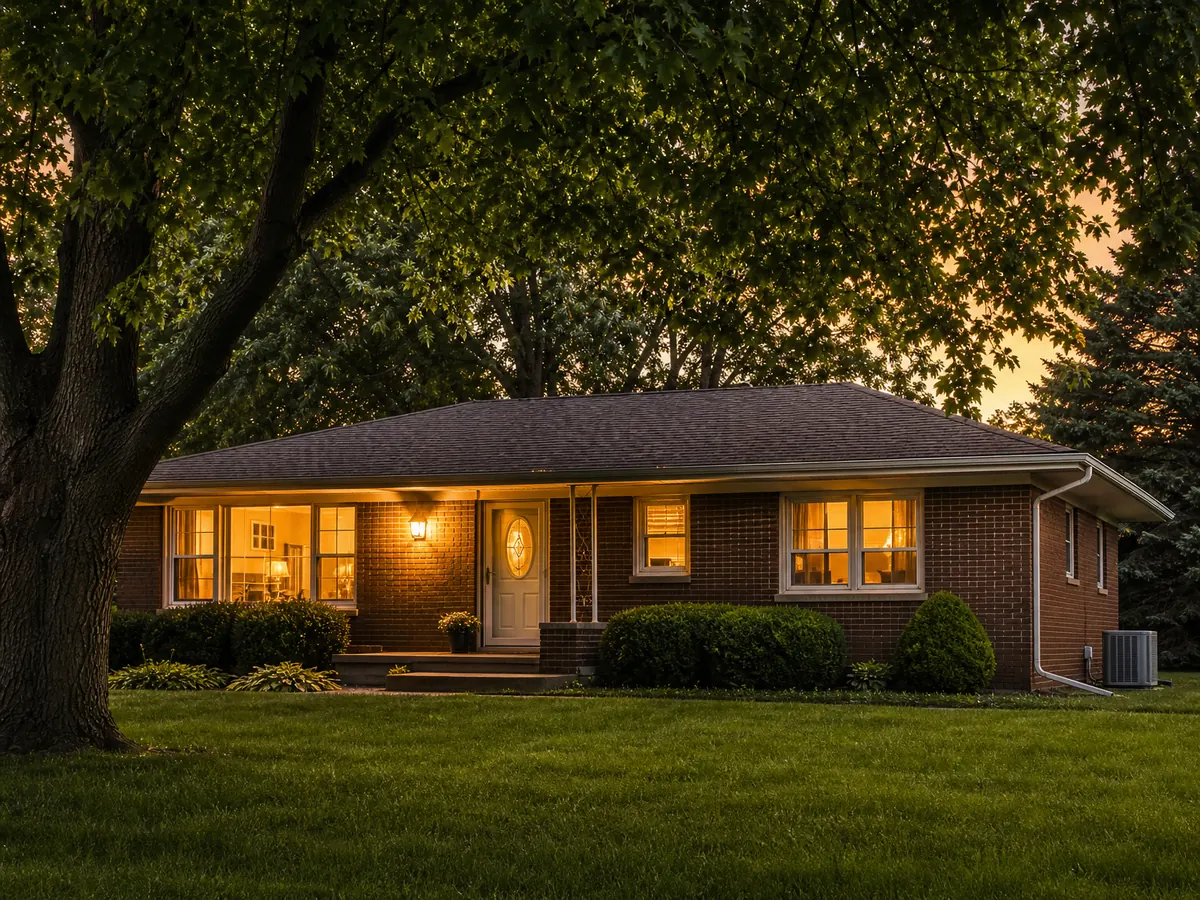
Air conditioners are sized in tons of cooling. A common shortcut is to guess from square footage. It’s a bad shortcut. Two 1,600-square-foot houses in Munster can need very different systems: one a shaded brick ranch with good attic insulation, the other a two-story with a wall of west-facing windows and a bonus room over the garage.
We look at the things that actually drive the load: floor area, insulation, windows and which way they face, air leaks, the number of floors, and the ductwork. An AC that’s too big cools the air fast and shuts off before it pulls the moisture out, which leaves you cold and clammy in a Lake Michigan July. One that’s too small runs all day and still loses on the worst afternoons. Right-sized, it runs longer, steadier cycles and actually dries the house.
Efficiency ratings, without the sales pitch
Central air efficiency is rated in SEER2. Higher numbers use less electricity for the same cooling. Higher-rated units also cost more to buy. How fast the extra efficiency pays you back depends on how many hours your AC runs, what you pay for power, and how long you’ll be in the house.
For most Northwest Indiana homes, cooling season is shorter than heating season, so the top efficiency tiers pay back more slowly here than they would in Texas. That doesn’t mean don’t buy one. It means we’ll price a standard option and a higher-efficiency option side by side, and tell you honestly what we’d pick for your situation. ENERGY STAR lists which models meet its efficiency criteria if you want to check our recommendation against an outside source.
What a full AC quote covers
- The outdoor condenser, sized to the house, on a level pad with room to breathe.
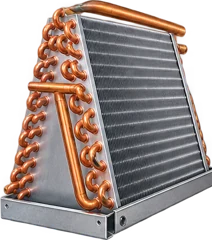
- A matched indoor coil. A new condenser paired with an old coil is a common shortcut, and it usually costs you efficiency and reliability.
- Refrigerant lines, replaced or flushed depending on condition and what the new system needs.
- Electrical: disconnect, whip, and breaker checked or replaced to match the new unit.
- Condensate drain and, where needed, a pump and safety switch.
- Thermostat, if the old one won’t run the new system properly.
- Hauling away the old equipment and recovering its refrigerant properly.
Anything extra, like a duct fix or a return-air addition, shows up as its own line so you know exactly what you’re paying for and why.
Heat pump instead of straight AC?
A heat pump is an air conditioner that can also run in reverse to heat the house. If you’re replacing your AC anyway, it’s worth at least asking whether a heat pump makes sense, usually paired with your gas furnace as a backup for the coldest weeks. It doesn’t fit every house or every budget. Our heat pumps page and the article on heat pump or furnace for an Indiana winter lay out the honest version.
Install day
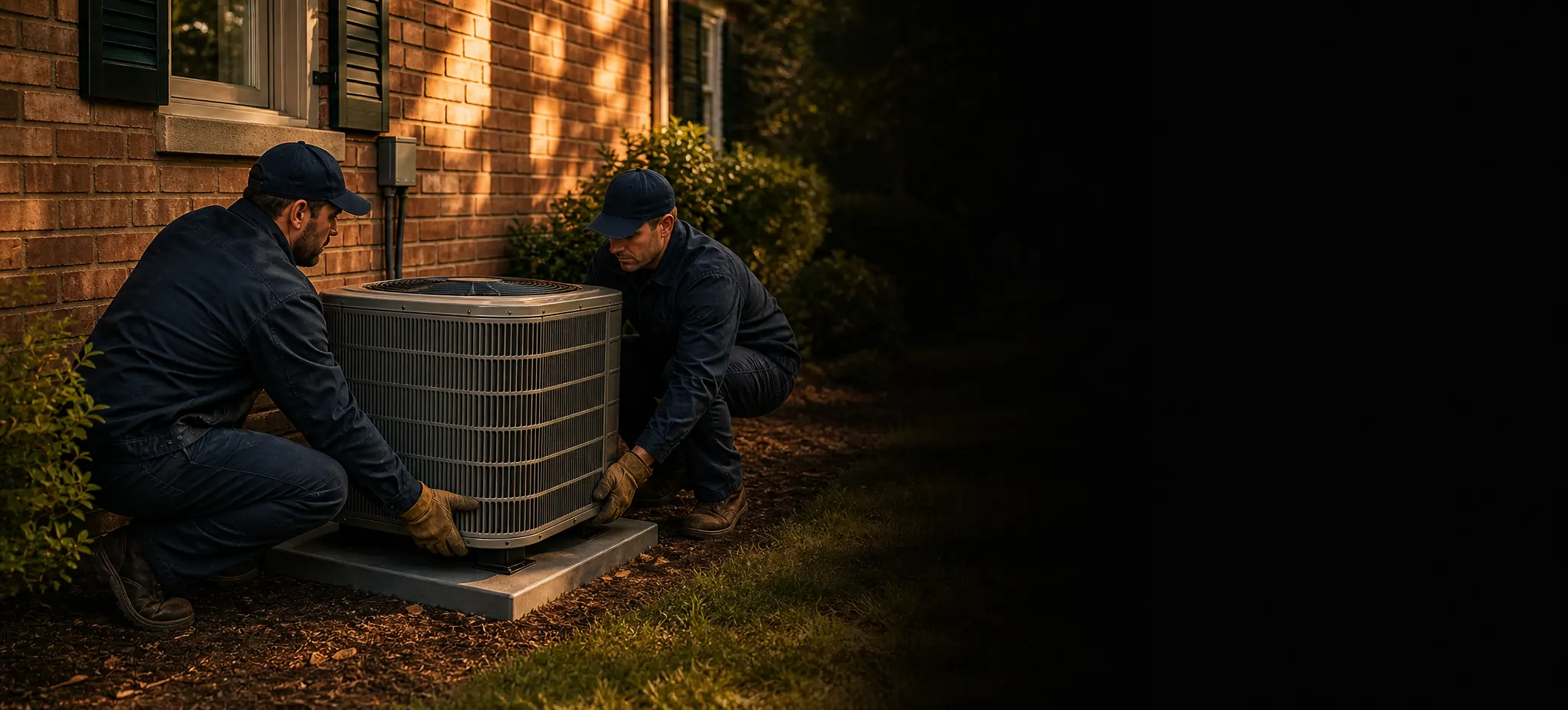
Most straight replacements take a day. We cover the floors on the way to the furnace, shut down power, recover the old refrigerant, and pull the old equipment. The new coil goes in at the furnace, the condenser goes on its pad, and we run lines, wire, and drain. Then we pull a vacuum on the lines, charge the system to spec, and measure how it’s actually performing: temperature drop across the coil, airflow, pressures. Before we leave, we show you the filter, the disconnect, and how the thermostat works. The bill matches the paper you signed.
Where we install
We install central air and ductless systems within about 20 miles of Munster: Highland, Hammond, Dyer, Schererville, St. John, Griffith, Crown Point, Merrillville, Hobart, East Chicago, Whiting, Cedar Lake, and Lansing and Calumet City on the Illinois side. The full map is on our service area page.
Keep the new one healthy
A new AC still needs a spring look: clean coil, clear drain, good electrical readings. That’s the difference between a system that lasts and one that surprises you in its eighth summer. Our seasonal tune-ups page lists what we check.
Get a written price
Call (219) 555-0142 or use the form below. We’ll look at the house and what’s in it now, and give you a sheet with the numbers. If the old unit can be fixed, that’s on the sheet too.